
𝑎𝑓𝑎𝑐ℎ𝑟𝑦@𝑚𝑖𝑡𝑚𝑎𝑛𝑑.𝑜𝑟𝑔
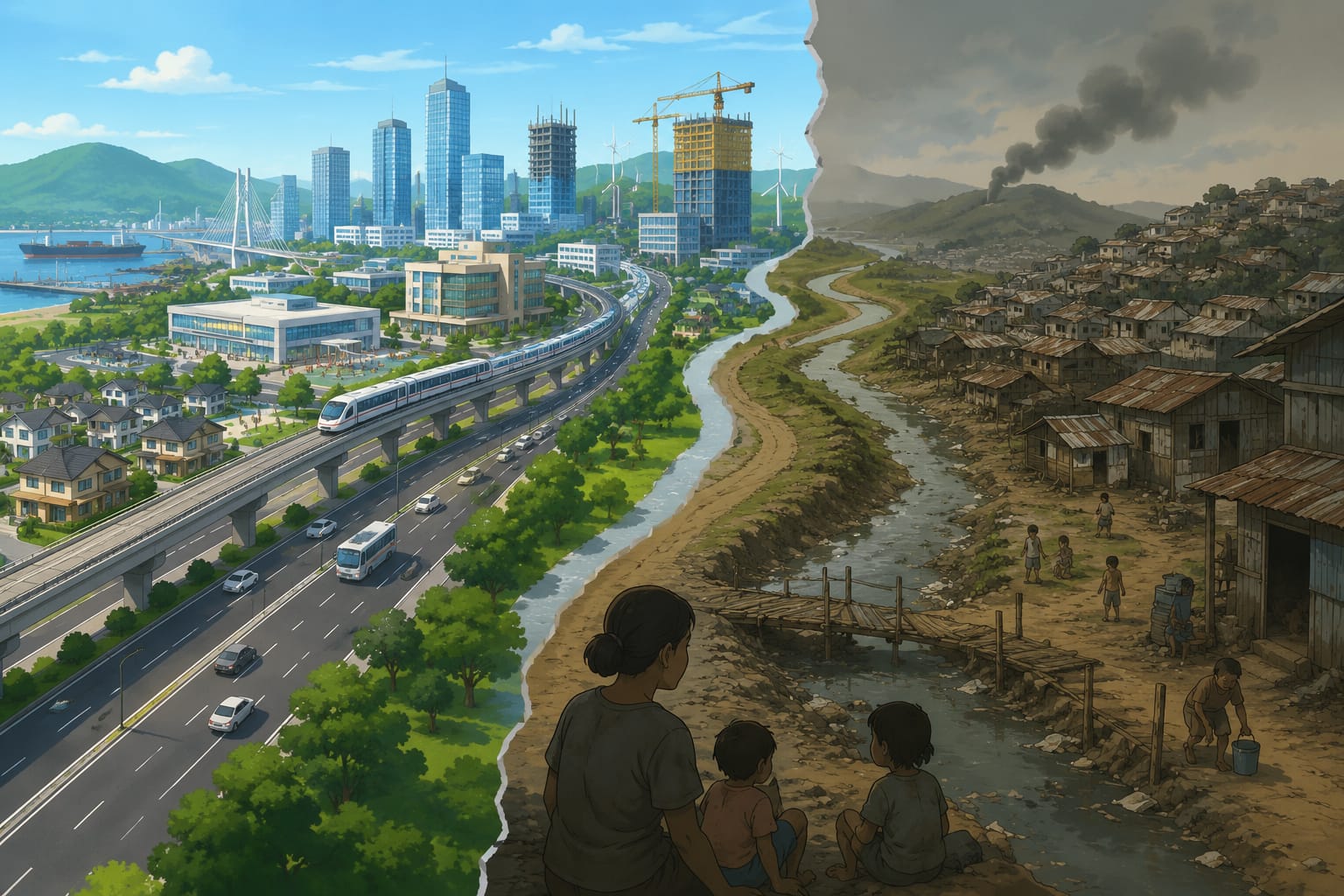
NTB is experiencing one of Indonesia’s most striking development paradoxes: the province is becoming more visible, more connected, and more economically strategic, yet poverty remains stubbornly embedded in everyday life. In 2026, the provincial government itself framed its development agenda around three pillars: poverty reduction, food security, and tourism growth. That official prioritization is revealing. It means poverty is not merely one issue among many; it is the foundation upon which almost every other policy question in NTB rests.
The most recent BPS data show that NTB’s poverty rate in September 2025 stood at 11.38 percent, equal to about 637,180 poor residents. This was an improvement from March 2025 and September 2024, but the figure is still large enough to suggest that poverty in NTB is structural rather than incidental. The danger is that policymakers may mistake a falling poverty percentage for the disappearance of poverty itself. A province can reduce poverty statistically while still leaving many households vulnerable to one failed harvest, one hospital bill, one fishing-season disruption, or one tourism downturn.
The geography of NTB intensifies the problem. Lombok and Sumbawa are not simply two islands under one administration; they contain different economic rhythms. Urban Mataram has better service access, stronger markets, and higher human development outcomes, while rural and peripheral districts face thinner infrastructure, weaker access to skilled jobs, and greater dependence on climate-sensitive livelihoods. BPS reported NTB’s Human Development Index at 73.97 in 2025, an improvement from 73.10 in 2024, but district inequality remains visible: Lombok Utara, for example, was recorded at 69.63, while Sumbawa Barat reached 76.46.
This matters because poverty in NTB is not only about income. It is also about distance, time, and friction. A poor household may live far from a health center, lack stable internet, face transport costs to school, or depend on seasonal informal work. These burdens rarely appear dramatically in economic growth headlines, but they shape whether children stay in school, whether pregnant women receive proper nutrition, and whether young adults can move from informal work into dignified employment.
The labor market adds another layer. NTB’s open unemployment rate was relatively low at 3.05 percent in November 2025, but the same BPS release noted that only 33.45 percent of workers were in formal employment, while underemployment and part-time work increased compared with August 2025. This is crucial: low unemployment does not automatically mean good jobs. In poorer regions, people often cannot afford to be “unemployed”; they work in low-productivity, unstable, informal activities. The real issue is not merely whether people work, but whether their work produces security.
NTB’s poverty challenge is therefore not solved by cash assistance alone, though social protection remains necessary. The deeper solution must combine income support, local economic diversification, and access to basic services. Poverty reduction must be connected to village roads, irrigation, digital access, school retention, women’s economic participation, market access for farmers, and better local value chains. A poor farmer does not escape poverty simply by producing more; they escape poverty when storage, transport, price information, cooperatives, and downstream processing allow them to capture more value.
The province’s development ambition must also avoid becoming too concentrated in symbolic growth centers. Mandalika, mining, smelters, and tourism campaigns generate visibility, but poverty reduction requires diffusion. Growth must travel from investment zones into kitchens, classrooms, fishing villages, farms, and microenterprises. The question is not whether NTB can grow. It clearly can. The question is whether growth can be domesticated—turned into household resilience, nutritional security, school completion, and locally owned opportunity.
The genius of NTB’s poverty problem is also its cruelty: poverty survives not because the province lacks potential, but because potential is unevenly converted into capability. The real test for NTB is not producing another impressive growth statistic. It is whether a child in rural Lombok Utara, a farmer in Dompu, a fisher family in Bima, and a young worker in Sumbawa can feel that the province’s progress belongs to them.