𝗠𝗮𝗻𝗱𝗮𝗹𝗶𝗸𝗮’𝘀 𝗠𝗶𝗿𝗿𝗼𝗿: 𝗧𝗼𝘂𝗿𝗶𝘀𝗺, 𝗚𝗹𝗮𝗺𝗼𝘂𝗿, 𝗪𝗮𝘀𝘁𝗲, 𝗮𝗻𝗱 𝘁𝗵𝗲 𝗨𝗻𝗲𝘃𝗲𝗻 𝗚𝗲𝗼𝗴𝗿𝗮𝗽𝗵𝘆 𝗼𝗳 𝗕𝗲𝗻𝗲𝗳𝗶𝘁
𝑎𝑓𝑎𝑐ℎ𝑟𝑦@𝑚𝑖𝑡𝑚𝑎𝑛𝑑.𝑜𝑟𝑔
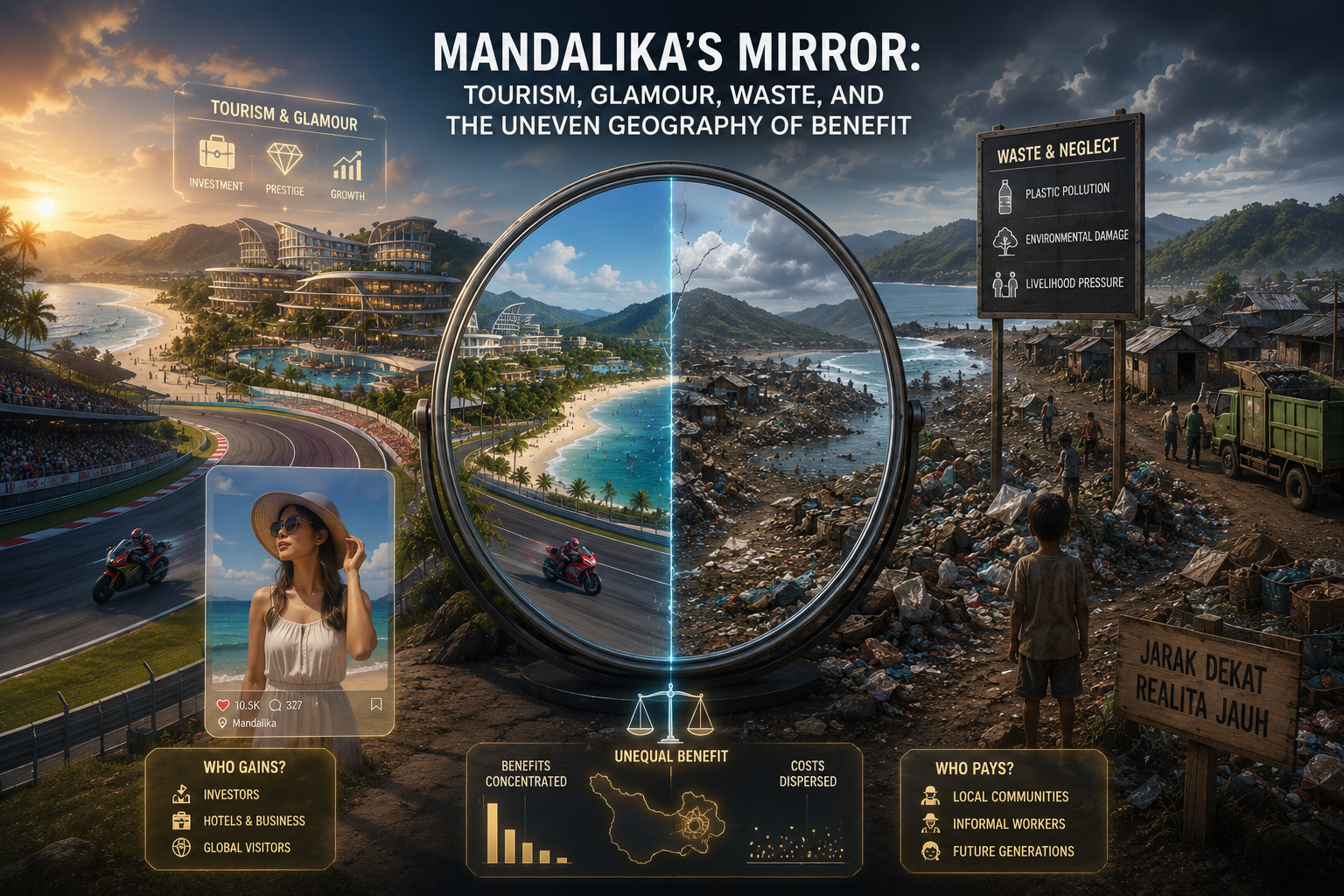
Tourism is one of NTB’s greatest opportunities and one of its most delicate dilemmas. Mandalika, MotoGP, beaches, halal tourism, trekking, diving, village tourism, and Lombok’s proximity to Bali all give NTB a powerful tourism identity. The provincial government has placed tourism growth as one of its three strategic pillars for 2026. Yet tourism in NTB increasingly functions like a mirror: it reflects both aspiration and inequality.
The Mandalika MotoGP has given NTB global visibility. ITDC reported in 2026 that the Mandalika MotoGP generated significant economic impact, with claims reaching the trillion-rupiah scale. Such events matter because they bring visitors, media attention, hotel occupancy, transport demand, and national prestige. They help reposition NTB from a peripheral province into an international destination.
But the key question is not whether tourism creates money. It does. The question is: who captures it, who pays its costs, and what kind of local economy it leaves behind after the event ends. Tourism can create jobs, but many are seasonal, low-wage, or informal. It can create markets for local products, but only if supply chains include local farmers, fishers, artisans, guides, and small businesses. It can improve infrastructure, but sometimes infrastructure primarily serves investors and visitors rather than residents.
One of the most visible contradictions is waste. Tourism depends on beauty, but tourism also produces garbage. Reports and studies on Lombok’s tourism zones have identified persistent gaps in waste management, public transportation, and water supply, especially in heavily visited areas such as Kuta Mandalika. Waste problems at tourism spots such as Tanjung Aan have also been publicly discussed as visitor numbers rise.
This is more than an aesthetic problem. Waste damages marine ecosystems, reduces destination quality, affects public health, and undermines the branding of sustainable tourism. A beach covered in plastic is not only unattractive; it is evidence of governance failure. The tourism economy sells landscape, but if it does not finance the protection of that landscape, it consumes its own foundation.
Water supply is another pressure point. Resorts, restaurants, and tourism facilities need reliable clean water. So do villages. If tourism infrastructure expands faster than water systems, the result may be conflict, groundwater stress, or unequal access. The same is true for roads and transport. Tourism can bring congestion without mobility justice if local public transport remains weak.
NTB’s tourism must also confront the risk of “enclave development.” This happens when a tourism zone is physically located in the province but economically disconnected from surrounding communities. Visitors arrive through organized channels, stay in investor-owned facilities, consume imported goods, and leave without meaningful interaction with local producers. The area looks developed, but the surrounding society receives limited benefits.
The alternative is community-rooted tourism. This means integrating local food systems, village homestays, cultural guides, craft cooperatives, local transport providers, waste banks, and conservation groups into the tourism economy. It also means training local youth not only as hotel workers but as entrepreneurs, digital marketers, language-skilled guides, event managers, and sustainability professionals.
NTB’s tourism future should not be measured only by arrivals. Arrival numbers can deceive. A destination may receive more tourists while local wages stagnate, waste grows, and cultural spaces become commodified. Better indicators would include local ownership share, average local income from tourism, waste processed per visitor, water-use efficiency, women’s participation, village enterprise revenue, and ecosystem health.
The fascinating tragedy of tourism is that it often destroys what made it attractive unless disciplined by governance. Lombok and Sumbawa offer extraordinary landscapes, but landscape alone is not strategy. NTB must decide whether tourism will become a short-term spectacle economy or a long-term civilizational project: one that protects nature, dignifies local culture, and distributes income beyond elite corridors.
Mandalika can be a gateway, but it cannot be the whole story. The future of NTB tourism lies in whether the glamour of international events can be translated into clean beaches, skilled youth, stronger villages, better waste systems, fairer supply chains, and pride among local communities. Otherwise, Mandalika will remain a beautiful mirror showing NTB what it might become—but also what it might lose.